Crece cada día con un plan personalizado. Empieza aquí

8 Best Books for Healing Emotions

You carry wounds you didn't choose. Maybe it's the parent who dismissed your feelings, the partner who weaponized your vulnerabilities, or trauma that echoes through generations.

Books on emotional healing won't erase your past, but they do something better — they help you understand it. Authors like Bessel van der Kolk in 'The Body Keeps the Score' and Mark Wolynn in 'It Didn't Start with You' show how emotions lodge in your body and family history. These eight books offer more than comfort. They give you language for what you've endured and tools to move through it.

Books on emotional healing that address codependency and manipulation

Books on emotional healing tackle the patterns that keep you stuck. 

Melody Beattie's 'Codependent No More' remains essential reading for anyone who loses themselves in relationships. She writes about the people who manage everyone's feelings except their own, who say yes when they mean no, and who believe loving someone means fixing them. Beattie doesn't offer easy answers. She explains how codependency develops and why changing these patterns initially feels impossible.

Susan Forward's 'Emotional Blackmail' exposes manipulation tactics you might not recognize as abuse. Forward identifies FOG — fear, obligation, and guilt — as the primary tools manipulators use. She gives very real-life examples: "If you love me, you must…", "You disappointed me…", "I suffer because of you…". You read it — and suddenly you see these scenarios in your own conversations.

The book is valuable because it gives clear steps on how to get out of such patterns: set boundaries, not succumb to manipulation, and reduce your own internal fear of losing the relationship.

Best books for emotional healing through body awareness and ancestral patterns

The best books for emotional healing recognize that trauma lives in your body, not just your thoughts.

  • Bessel van der Kolk's 'The Body Keeps the Score' explains why you might freeze during conflict or feel anxious without knowing why. Van der Kolk spent decades studying trauma survivors and found that talk therapy alone often fails. Your nervous system remembers what your mind tries to forget. He explores treatments like EMDR and yoga that help release stored trauma.

  • Resmaa Menakem's 'My Grandmother's Hands' extends this understanding across generations and racial lines. He argues that trauma doesn't disappear when people refuse to discuss it. Instead, it passes down through families and communities. Menakem focuses on racialized trauma in America and offers body-based exercises to interrupt these cycles.

  • Mark Wolynn's 'It Didn't Start with You' takes a similar approach to inherited family trauma. He shows how your anxiety or depression might connect to events that happened before you were born. Both authors provide practical methods for healing wounds you inherited. 

  • Louise Hay's 'Heal Your Body' connects physical symptoms to emotional patterns. 

  • At the same time, Joan Didion's 'The Year of Magical Thinking' offers an honest account of grief that refuses to follow any timeline.

Find your next read with a short quiz

All the best books on topic

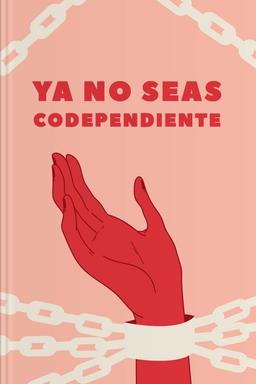
What is Codependencia - Cómo dejar de controlar a los demás y empezar a ocuparse de sí mismo about?

Este libro explora el concepto de la codependencia, ofreciendo herramientas y estrategias para aquellos que luchan con relaciones disfuncionales. A través de relatos y ejercicios, invita a los lectores a reconocer comportamientos destructivos y a priorizar su propio bienestar emocional. La autora guía hacia la sanación personal, enfatizando la importancia de dejar de controlar a los demás y centrar la atención en el autocuidado.

Who should read Codependencia - Cómo dejar de controlar a los demás y empezar a ocuparse de sí mismo

  • Personas en relaciones tóxicas buscando sanación personal.
  • Profesionales de la salud mental y terapeutas en formación.
  • Lectores interesados en el crecimiento personal y la autoayuda.
book

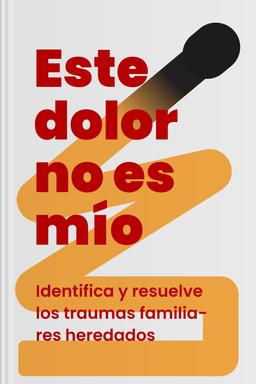
What is Este dolor no es mío - Identifica y resuelve los traumas familiares heredados about?

Este libro explora cómo los traumas familiares pueden afectar a las generaciones futuras. A través de casos prácticos y una profunda investigación, el autor ofrece herramientas para identificar y sanar las heridas emocionales heredadas. La obra se centra en la conexión entre nuestros comportamientos y las experiencias de nuestros antepasados, proporcionando un camino hacia la sanación personal y la transformación de patrones familiares dañinos.

Who should read Este dolor no es mío - Identifica y resuelve los traumas familiares heredados

  • Personas interesadas en la salud mental familiar.
  • Terapeutas que trabajan con traumas intergeneracionales.
  • Lectores que buscan sanar heridas emocionales.
book

Frequently asked questions on books for emotional healing

What is the best way to heal emotionally?

Emotional healing requires acknowledging your pain instead of avoiding it. Start by naming what you feel without judgment. Therapy, body-based practices such as yoga or somatic experiencing, journaling, and supportive relationships can help process difficult emotions. Healing isn't linear — you'll have setbacks. The goal isn't to forget what hurt you but to carry it differently so it no longer controls your present.

How to heal yourself emotionally book?

'The Body Keeps the Score' by Bessel van der Kolk provides comprehensive approaches to emotional healing. Van der Kolk combines neuroscience research with practical treatments for processing trauma. The book explains why traditional talk therapy sometimes fails and introduces alternatives like EMDR, neurofeedback, and body-centered therapies. It's written for both professionals and anyone seeking to understand their emotional wounds.

What is best for emotional healing?

The best way to heal emotionally is to combine honesty with yourself, support from others, and small daily practices. Writing down thoughts, talking about feelings, and noticing what triggers them helps. Physicality also works: breathing, walking, pausing. It’s like Brené Brown or Gabor Maté — a gentle return to yourself step by step.

What is trauma purging?

Trauma purging refers to the physical and emotional release that happens when your body discharges stored traumatic stress. This might include crying, shaking, or other involuntary movements as your nervous system processes unresolved experiences. It's a natural healing response, not something you force.

What is the best book for healing?

The best book for emotional healing is 'The Body Keeps the Score' by Dutch-American psychiatrist, Bessel van der Kolk. It explains how our emotions are stored in the body and affect behavior. The book gives hope that even after deep stress, the brain can recover. It is a difficult read, but it brings a sincere and deep understanding of oneself.

What is the best book on emotional regulation?

Denis Greenberger wrote the most effective book on emotional self-regulation, titled 'Mind Over Mood.' It is very accessible and practical in showing the links between thoughts, emotions, and feelings, and shows how to recognize your own internal "sparks" before they develop into a fire. The exercises are very basic and friendly, but you come away with peace and control in your daily life.