Crece cada día con un plan personalizado. Empieza aquí

7 Must-Read Books Exploring the Concept of Trust

Trust is the unseen backbone of every human connection in your life. A survey conducted by YouGov found that trust, honesty, and respect are considered important by over 90% of adults in the US in relationships. At the same time, many of us struggle with building and maintaining it. If previous betrayals have made you defensive or if you are trying to repair a fractured relationship, trust will help to encourage those journeys.

Books on trust, such as Brené Brown's 'Daring Greatly' and Stephen M.R. Covey's 'The Speed of Trust,' provide actionable strategies for rebuilding confidence in yourself and others. These books explore how vulnerability creates stronger connections and why small and consistent actions matter more than grand gestures. If you want to improve your personal or professional relationships, reading books about trust will definitely change the way you interact with the world and the people around you.

Books on trust in relationships

Books that deal with trust reveal the curious truth that betrayal does not always end a relationship. In 'The State of Affairs,' therapist Esther Perel takes on a modern meaning of infidelity and what this means to our conception of traditional thinking. She examines what affairs reveal about our emotional and biological need for attachment, connection, and even excitement. Perel does not justify betrayal, necessarily, but she does wonder why people seem to risk everything for it.

Trust issues often stem from unspoken expectations. Perel shows couples how to have difficult conversations they've avoided for years. Her approach focuses on understanding the story you tell yourself about trust. When you expect your partner to know what you need without asking, disappointment becomes inevitable.

The book provides frameworks for rebuilding after betrayal. Perel explains that honest communication following infidelity can create deeper intimacy than existed before. Spouses learn to communicate their desires, which they previously kept hidden. And it becomes clear that trust isn't about never being hurt, but about believing you can survive hurt together.

Books on trust issues at work

Books on trust expose how professional relationships depend on the stories we believe about each other. 'All Marketers Are Liars' by Seth Godin isn't actually about lying — it's about how people trust narratives that align with their worldview. This approach applies directly to workplace dynamics, where colleagues decide whether to trust you based on the story your actions tell.

You build professional trust through consistency between what you promise and what you deliver. Godin shows that people don't trust coworkers because of credentials or features. They trust the story those things tell about reliability and shared values.

In 'The Speed ​​of Trust,' Stephen M.R. Covey shows that trust is not just a "nice-to-have" but a key business asset that directly impacts productivity and profits. When a team has trust, decisions are made faster, control is reduced, and conflict and bureaucracy disappear.

Covey explains that low trust slows down everything – communication, innovation, even employee enthusiasm. But it can be developed through transparency, consistency, and keeping promises. Covey provides real-life examples of companies that have increased efficiency simply by rebuilding trust between leaders and teams.

Adam Kahane's 'Collaborating with the Enemy' addresses trust in high-stakes situations where people have opposing interests. He worked with conflicting groups in South Africa during the apartheid era. Kahane discovered that trust doesn't require agreement or even liking each other. You can collaborate productively by establishing shared processes and honoring boundaries. His methods apply to any workplace with high tension where results still matter.

These books share a common thread: trust isn't something you either have or don't have, but a skill you build through deliberate practice and honest communication. 

Find your next read with a short quiz

All the best books on topic

What is ¿Todos los comerciales son mentirosos? - Los actuales vendedores de sueños about?

Este libro explora el papel de los vendedores en la sociedad contemporánea y cuestiona la percepción negativa que se tiene sobre ellos. A través de ejemplos y reflexiones, se argumenta que los buenos comerciales son aquellos que ofrecen valor genuino y construyen conexiones auténticas, transformando la idea de vender en una forma de compartir sueños y aspiraciones. Una invitación a redefinir la venta en un mundo saturado de promesas.

Who should read ¿Todos los comerciales son mentirosos? - Los actuales vendedores de sueños

  • Profesionales de marketing en busca de innovación.
  • Estudiantes de negocios interesados en la publicidad.
  • Lectores curiosos sobre la psicología del consumidor.
book

What is Consigue al indicado - Aprende los secretos de la mente masculina para encontrar al hombre que deseas y el amor que mereces about?

Este libro ofrece estrategias prácticas para comprender la mente masculina y mejorar las relaciones amorosas. A través de consejos y relatos, guía a las lectoras en la búsqueda del hombre ideal, proporcionando herramientas para aumentar la confianza y la atracción. Con énfasis en la autovaloración y la comunicación, se convierte en una guía indispensable para quienes desean construir una relación sincera y duradera.

Who should read Consigue al indicado - Aprende los secretos de la mente masculina para encontrar al hombre que deseas y el amor que mereces

  • Mujeres que buscan entender a los hombres.
  • Solteras interesadas en relaciones amorosas exitosas.
  • Personas que desean mejorar su vida amorosa.
book

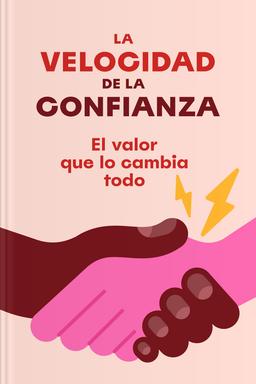
What is La velocidad de la confianza - El valor que lo cambia todo about?

Este libro explora cómo la confianza influye en todas las relaciones, desde lo personal hasta lo profesional. A través de ejemplos prácticos y consejos aplicables, los autores demuestran que construir confianza no solo mejora la comunicación, sino que también incrementa la eficacia y el rendimiento de equipos y organizaciones. La confianza se presenta como un esencial activo que transforma la cultura y los resultados en cualquier contexto.

Who should read La velocidad de la confianza - El valor que lo cambia todo

  • Líderes empresariales que buscan mejorar relaciones laborales.
  • Profesionales interesados en el desarrollo personal y profesional.
  • Estudiantes de negocios y administración que desean aprender sobre confianza.
book

Frequently asked questions about books on trust

What are the four levels of trust in a relationship?

The four levels of trust demonstrate how relationships can deepen. The first level is superficial trust, which relies solely on basic politeness. The second level of trust is emotional trust, when feelings are shared. The third level is vulnerable trust, when fears are shared. The fourth, most developed level of trust is unconditional trust.

Why do books have 10 9 8 7 6 5 4 3 2 1?

These numbers on the copyright page are referred to as the printer's number line. They show the number of copies of the book: the smallest number remaining is the current printing. For example, if it says 10 9 8 7 6 5 4 3 2, it is the second printing. When only 1 remains, it is the first edition.

What are the four books in the novel, 'Trust'?

Yes, the novel 'Trust' by Hernan Díaz describes four "books within a book." Here they are: 'Bonds' is a novel written by the fictional author Harold Vanner. 'My Life' is an autobiography written by financier Andrew Bevel. 'A Memoir, Remembered' is a memoir written by secretary Ida Partenza. 'Futures' is a diary entry written by Mildred Bevel, Bevel's wife.

How do you fix trust issues?

To resolve a trust issue, you first need to understand its root cause, which may be past traumas or specific situations. It is essential to communicate openly about your feelings, gradually test each other's trustworthiness, cultivate emotional resilience, and establish healthy boundaries. Sometimes, it is helpful to seek support from a psychologist.

What's the psychology of trust issues?

The study of trust explores how people decide whom and whom not to trust. It describes how our experiences, feelings, and assumptions influence our willingness to open up to others. Trust emerges from predictability, integrity, and compassion. Trust can be quickly shattered by a violation of safety or trust expectations.