Crece cada día con un plan personalizado. Empieza aquí

8 Best Books About the Industrial Revolution

Books about the Industrial Revolution are far more than "steam engines changed things." The actual story is much messier and more human. These reads reveal how ordinary people transitioned from farming to factory labor, how inventors created new industries from nothing, and how cities grew by hundreds of thousands of people almost overnight.

You'll discover why child labor became such a problem, how working conditions led to the first unions, and how this era produced both great riches and great poverty at the same time. 

Books about the Industrial Revolution: Understanding the transformation

What makes books about the Industrial Revolution good and useful today? It connects past patterns to modern problems. The gig economy? Factory owners created unstable employment situations first. Are you worried about AI killing jobs? People freaked out about machines in precisely the same ways in the 1820s. Environmental degradation? This was primarily born out of growth-at-all-costs thinking. 

Reading about this will provide you with the depth to understand better why capitalism works the way it does, where worker rights originate, and why certain economic conditions persist from generation to generation. These books are not solely about technological advancements with steam engines and weaving machines, but also about the social disruption caused by pollution, the densification of slums, and class warfare, as well as new political movements. 

Whether you're interested in the economics of the time, the conditions in which workers lived, or the inventions that sparked it all, something exists here that could help you understand the Industrial Revolution.

Books about the Industrial Revolution: The people, the inventions

Books about the Industrial Revolution are also going to show you the people involved: inventors, activists, workers, and reformers. For example, James Watt improved the steam engine. Richard Arkwright designed the textile factory. George Stephenson connected cities with his railways. But you will also meet people who documented the destruction and organized for change. Charles Dickens revealed child labor through his novels. Friedrich Engels, who walked through the worst neighborhoods in Manchester, wrote about what capitalism did to people when no one was watching.

These books will explore the tension between progress and exploitation. Yes, the Industrial Revolution led to economic growth, the development of new technologies, and increased opportunities for people's mobility and advancement. But it also created terrible working conditions, destroyed the environment, and created wealth disparities that we still deal with. 

It is critical to understand both sides. Some books that touch on the same time frame or period will keep revisiting the theme of inventions leading to other inventions, sparking large-scale change. Other books will allow you to gain a deeper understanding of what it was like to work in a factory or what it was like to survive in a rapidly changing urban area.

Find your next read with a short quiz

All the best books on topic

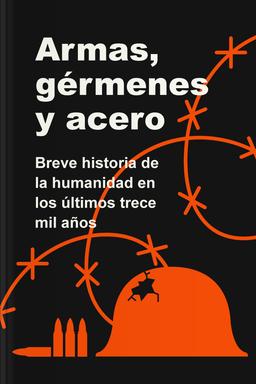
What is Armas, gérmenes y acero - Breve historia de la humanidad en los últimos trece mil años about?

Este libro explora cómo factores geográficos, ambientales y sociales han moldeado el desarrollo de las civilizaciones humanas a lo largo de la historia. A través de un análisis multidisciplinario, el autor examina el impacto de la domesticación de plantas y animales, así como la propagación de tecnologías y enfermedades, para explicar las desigualdades en el poder y la riqueza entre diferentes sociedades. Un enfoque integrador que desafía las explicaciones convencionales.

Who should read Armas, gérmenes y acero - Breve historia de la humanidad en los últimos trece mil años

  • Estudiantes de historia y antropología.
  • Aficionados a la ciencia y la naturaleza.
  • Lectores interesados en la evolución humana.
book

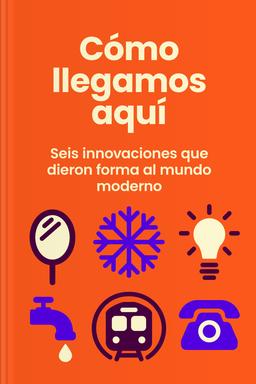
What is Cómo llegamos aquí - Seis innovaciones que dieron forma al mundo moderno about?

Este libro explora seis innovaciones clave que han transformado la sociedad y moldeado el mundo moderno. A través de un análisis profundo, el autor revela cómo estas ideas revolucionarias interconectadas han influido en nuestro día a día. La narrativa combina historia, ciencia y tecnología, ofreciendo una perspectiva fascinante sobre el progreso humano y el impacto duradero de estas innovaciones en nuestra vida contemporánea.

Who should read Cómo llegamos aquí - Seis innovaciones que dieron forma al mundo moderno

  • Estudiantes de historia y tecnología.
  • Profesionales en innovación y emprendimiento.
  • Lectores interesados en el impacto de las ideas.
book

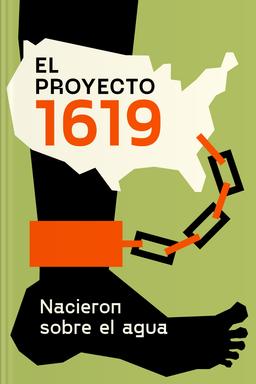
What is El Proyecto 1619 - Nacieron sobre el agua about?

Este libro explora la historia de los afroamericanos en Estados Unidos, comenzando con la llegada de los primeros esclavos en 1619. A través de ensayos y relatos, analiza cómo la experiencia africana ha moldeado la identidad estadounidense, abarcando temas de racismo, opresión y resistencia. La autora invita a reflexionar sobre el impacto de esta historia en la sociedad actual, resaltando la importancia de reconocer el legado de la comunidad negra.

Who should read El Proyecto 1619 - Nacieron sobre el agua

  • Estudiantes interesados en la historia estadounidense.
  • Lectores que buscan entender la herencia africana.
  • Activistas por la justicia racial y social.
book

FAQs about the books on the Industrial Revolution

What is the best book on the Industrial Revolution?

'The Industrial Revolution' by T.S. Ashton is a solid starting point — straightforward and historically reliable. For something that reads more like a story, try 'The Condition of the Working Class in England' by Friedrich Engels. It's from the 1840s but feels like investigative journalism. If you want to understand the connections to today, 'Capital in the Twenty-First Century' by Thomas Piketty effectively links Industrial Revolution inequality to current wealth gaps.

What is the #1 most-read book of all time?

The Bible wins by miles — over 5 billion copies distributed. After that comes 'Quotations from Chairman Mao' at around 900 million. For fiction, 'Don Quixote' and 'A Tale of Two Cities' rank near the top. This doesn't directly relate to the Industrial Revolution, but Dickens' novels from that period are among the most-read books ever, which speaks volumes about their impact.

What is the best book on the Revolution?

Depends on which revolution you mean. American Revolution? Try '1776' by David McCullough. French Revolution? 'Citizens' by Simon Schama is great. For the Industrial Revolution, go with Ashton or Eric Hobsbawm's 'The Age of Revolution.' "Revolution" covers a lot of ground, so narrowing down which one you're asking about will get you way better recommendations for that specific period.

What are 5 books everyone should read?

This is all dependent on your interests, but here is a decent selection: 'To Kill a Mockingbird' for justice and empathy, '1984' for understanding power, 'Sapiens' for big-picture human history, 'Man's Search for Meaning' for resilience, and 'The Alchemist' for following your own path. For an Industrial Revolution perspective, consider adding Engels or Dickens to see how writers captured that chaotic era.

Who is the greatest writer of the Industrial Revolution?

Charles Dickens, no contest. Novels like 'Hard Times,' 'Oliver Twist,' and 'Bleak House' showed the poverty and exploitation of Industrial Revolution England in ways nobody could ignore. He made the human cost impossible to ignore. Honorable mentions go to Elizabeth Gaskell for 'North and South,' Friedrich Engels for his essays, and the Brontë sisters, whose work reflected all the tensions of that period.

What is the most life-changing book to read?

Totally depends on where you're in life. People often mention 'Man's Search for Meaning' by Viktor Frankl, 'The Power of Now' by Eckhart Tolle, 'Atomic Habits' by James Clear, or 'Sapiens' by Yuval Noah Harari. An Industrial Revolution author could completely change your worldview about capitalism, and when this happens, it can be transformative to your being too.