You're constantly being reactive instead of proactive, perpetually putting out fires rather than planning. Your competitors seem to forecast the market before a shift happens. You're asking yourself why your best-laid plans keep falling apart.
Here's what's missing: books on strategic thinking teach you to see patterns others miss, anticipate problems before they arrive, and make moves that create lasting advantages instead of temporary wins.
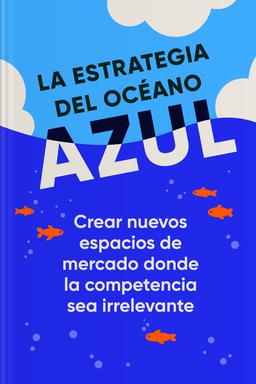
W. Chan Kim in 'Blue Ocean Strategy' and Simon Sinek in 'Start with Why' show that strategic thinking isn't about being the smartest person in the room. It's about asking better questions, challenging assumptions, and understanding what truly drives success. These 18 books will rewire how you approach problems at work and in life.
Books on strategic thinking that teach you to see the bigger picture
Books on strategic thinking reveal why some people consistently make better decisions under pressure.
Ozan Varot's book, 'Think Like a Rocket Scientist,' explains how to think like a systematic engineer who is sending a rocket into space: plan several steps ahead, test your assumptions, and don't be scared to fail. Varot explains that mistakes are just data, not defeat, and we use them to analyze the situation.
He gives a simple formula for strategic thinking: understand the problem completely, break it down into parts, test and adapt the solution. The book combines science and practice, showing that even complex projects can be implemented if you think structurally, not chaotically.
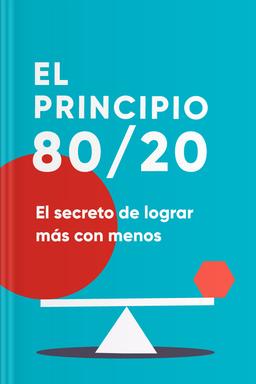
Richard Koch’s ‘The 80/20 Principle’ shows strategic thinking in its most practical format: look for those 20% of actions that give 80% of the result. Koch seems to be saying: "Stop the fuss — think in points.” He has several strong ideas that pump up strategic thinking.
Koch advises not only to look for the "effective 20%", but also to ruthlessly reject actions that do not give results — this is a small revolution for any planning. He shows how reducing efforts can increase the result. And also: think not wider, but deeper. When the focus is narrow, decisions become more precise, like those of a chess grandmaster who sees three moves ahead
Margaret Heffernan's 'Uncharted' about strategic thinking shows how to act in conditions of uncertainty. Heffernan says: Don't just look for accurate predictions — look for flexibility, adaptability, and a willingness to take risks.
She tells the stories of entrepreneurs and researchers who found their way when there was no map. The main idea is that strategy is not an A-to-Z plan, but rather the ability to navigate chaos, learn quickly from mistakes, and make unconventional decisions. The book reminds us that success often comes not from control, but from strong thinking, creativity, and a willingness to face the unknown.
Best books on strategic thinking for practical problem-solving
The best books on strategic thinking provide you with frameworks that you can apply immediately.
Andrew Sobel and Jerold Panas wrote 'Power Questions' specifically for this. Strategic thinking begins with asking the right questions, rather than jumping to solutions. They pose actual questions, such as "What would happen if we did nothing?" or "What problem are we really trying to solve?" These force you to pause and think before acting.
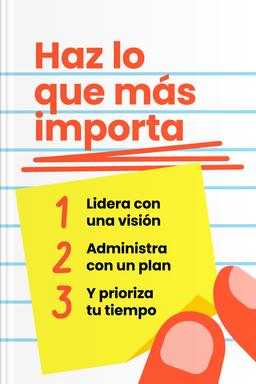
Rob and Steve Shallenberger's 'Do What Matters Most' addresses why smart people stay busy but accomplish little. They introduce a pre-week planning system where you identify your top three priorities before the week starts. Everything else becomes negotiable. This prevents the common trap of spending all your time on urgent tasks while neglecting important strategic work.
'Start with Why' by Simon Sinek changed how leaders think about motivation and direction. Companies that start with why (their purpose) instead of what (their product) create movements, not just customers. Apple doesn't sell computers; they sell a vision of creative rebellion. That strategic clarity guides every decision they make, from product design to marketing. When you understand your "why," choices become simpler because you have a filter for everything.

 Crecimiento personal
 Apps & Digital Tools
 Negocios y carrera profesional
 Éxito
Éxito Growth Tools
 Psicología
 Comunicación
 Relaciones