Crece cada día con un plan personalizado. Empieza aquí

7 Best Books on Bias

You think you're fair. You believe you judge people based on merit, not stereotypes. But then you catch yourself — surprised when someone defies your expectations, or realizing you made an assumption you can't quite explain. 

Books on unconscious bias reveal what your brain does without permission: the snap judgments, the invisible filters, the patterns you inherited without choosing them. These seven books won't just tell you that bias exists. They'll show you exactly how it works in your decisions, your relationships, and your daily life.

Books on unconscious bias that expose hidden patterns

Books on unconscious bias do something uncomfortable — they prove you're not as objective as you think. 

Take Mahzarin R. Banaji and Anthony G. Greenwald's 'Blindspot.' They created the Implicit Association Test, which measures biases you don't even know you have. Millions of people have taken it and discovered they hold preferences that contradict their conscious beliefs. You might genuinely support equality while your brain still makes automatic associations based on race, gender, or age.

Or look at David McRaney's 'You Are Not So Smart.' It's a fun, slightly sarcastic journey inside our heads. He shows that the brain is not a wise magician, but rather a stand-up comedian, constantly inventing shortcuts to save energy. And it is these "brain hacks" that become prejudices.

McRaney explains why we are sure that we remember events accurately, although the brain rewrites them like an editor on a deadline. Or why we fall in love with a first impression, even if it is wrong — the effect of attachment in action. 

His examples are very everyday. Do you buy something "on sale" because it seems profitable? Hello, the lure effect. Are you sure that others think more of you than they really are? Oh, it's the spotlight effect.

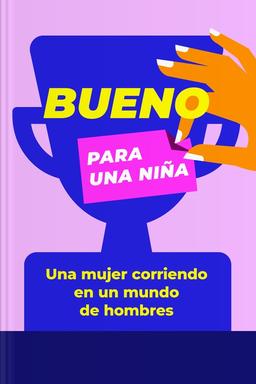
Lauren Fleshman's 'Good for a Girl' addresses bias in sports, highlighting how female athletes face different standards from the outset. She wasn't just fighting opponents. She was fighting assumptions about what women's bodies should do, what pain they should tolerate, and what success should look like for them. Her story makes bias personal and specific, not just an abstract concept.

Best books on unconscious bias for making better decisions

The best books on unconscious bias don't stop at awareness. They give you tools to make fairer choices.

Jessica Nordell's 'The End of Bias' examines interventions that actually work. Blind auditions increased the number of women in orchestras by 50%. Simple changes in how you structure decisions can significantly reduce bias. You can't eliminate bias entirely, but you can design systems that limit its influence.

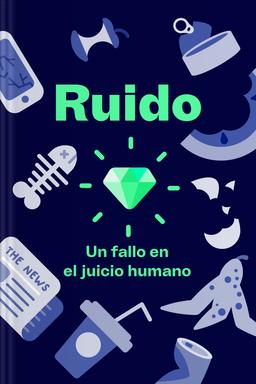
Daniel Kahneman's 'Noise' adds another layer. 'Noise' reveals that our decisions are not only influenced by bias but also by noise — random fluctuations in judgments. Even experts doing the same job make different decisions because of process, mood, or context instability. Kahneman divides the problem into two parts: systematic errors (biases) and nonrandom but inconsistent errors (noise). For example, two doctors may evaluate the same case differently — not because of bias, but because of random factors.

Hans Rosling's 'Factfulness' tackles how bias distorts your view of the entire world. You probably think things are worse than they are. That's the negativity instinct — your brain remembers bad news and ignores gradual improvements. 

Rosling uses data to challenge ten instincts that make you see the world incorrectly. When you check your assumptions against actual numbers, your perspective shifts completely.

These books on bias share one idea: your brain is constantly lying to you, but you can learn to question it. Start with one book that matches where you see bias affecting you most — workplace decisions, personal relationships, or how you consume news.

Find your next read with a short quiz

All the best books on topic

What is Bueno para una niña - Una mujer corriendo en un mundo de hombres about?

Este libro narra la experiencia de una mujer atleta que desafía las normas en un mundo dominado por hombres. A través de sus vivencias en el deporte y su lucha por la igualdad, aborda temas como la resiliencia, la autoaceptación y la búsqueda de la identidad. La autora comparte sus triunfos y fracasos, inspirando a las lectoras a encontrar su propia fuerza y voz en cualquier ámbito de la vida.

Who should read Bueno para una niña - Una mujer corriendo en un mundo de hombres

  • Mujeres jóvenes interesadas en empoderamiento.
  • Corredores que buscan inspiración en su deporte.
  • Lectores de biografías de mujeres fuertes.
book

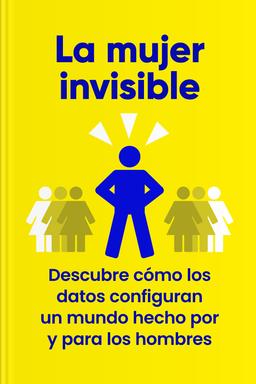
What is La mujer invisible - Descubre cómo los datos configuran un mundo hecho por y para los hombres about?

Este libro revela cómo los datos y la falta de inclusión afectan a las mujeres en diversas áreas, desde la salud hasta el diseño urbano. A través de investigaciones y ejemplos concretos, se analiza cómo la ignorancia sobre la experiencia femenina perpetúa desigualdades. La autora aboga por un cambio radical en la recopilación de datos y en la toma de decisiones para construir un mundo más equitativo.

Who should read La mujer invisible - Descubre cómo los datos configuran un mundo hecho por y para los hombres

  • Mujeres interesadas en la igualdad de género.
  • Estudiantes de sociología y estudios de género.
  • Profesionales en tecnología y estadísticas.
book

Ruido - Un fallo en el juicio humano

by Daniel Kahneman, Olivier Sibony & Cass R. Sunstein

What is Ruido - Un fallo en el juicio humano about?

Este libro explora cómo el ruido, entendido como la variabilidad no deseada en la toma de decisiones, afecta nuestras vidas y sociedades. A través de investigaciones y ejemplos, los autores analizan cómo este fenómeno se manifiesta en diferentes ámbitos, incluyendo el juicio en la justicia y la economía. Ofrecen estrategias para reducir el ruido y mejorar la calidad de decisiones, promoviendo un pensamiento más claro y sistemático.

Who should read Ruido - Un fallo en el juicio humano

  • Estudiantes de psicología y comportamiento humano.
  • Profesionales en toma de decisiones y estrategia.
  • Lectores interesados en economía y análisis crítico.
book

Frequently asked questions on books about bias

What are the 5 R's of reducing unconscious bias?

The 5 R's are Recognize (notice your bias exists), Reflect (understand where it comes from), Respond (don't act on automatic assumptions), Reframe (challenge your initial thoughts), and Repair (fix mistakes when bias affects your decisions). This framework helps you interrupt bias before it shapes your actions.

What is the best book about consciousness?

Daniel Kahneman's 'Thinking, Fast and Slow' is widely considered the best book about consciousness. It explains how your mind operates through two systems: fast, automatic thinking and slow, deliberate reasoning. Understanding this split helps you recognize when bias takes over and when you're actually thinking critically about your choices.

What are the three C's for managing unconscious bias?

The three Cs work well in overcoming prejudice: consciousness, slowing down, and curiosity. First, notice the moment when the brain slips into an automatic judgment. Then slow down the reaction so as not to act on instinct. And finally, sow a slight doubt: "Is this really true?" This already breaks old patterns.

What is the new name for unconscious bias?

Many researchers now use "implicit bias" instead of unconscious bias. The term better captures that these biases operate automatically and outside conscious awareness, without suggesting they're impossible to address. Some also use "hidden bias" or "automatic bias" to emphasize that you can become aware of them through deliberate effort.

What are the 4 types of unconscious bias?

The four main types are affinity bias (favoring people similar to you), confirmation bias (seeking information that supports existing beliefs), attribution bias (judging your successes as skill and others' as luck), and halo effect (letting one positive trait color your overall impression). Each operates differently, but all distort fair judgment.

How do I overcome unconscious bias?

Recognizing when you may be making automatic judgments is the first step towards overcoming unconscious biases. The next step is to pause, check your facts, and ask yourself, "What led me to think this?" Being around outside people and experiences will provide a much better view.