Crece cada día con un plan personalizado. Empieza aquí

4 Best Automation Books

Automation is changing the way we work, and we need to be aware of this now. Automation books simplify what's happening as software, robots, and AI take over various repetitive tasks, and what this means for your job, your industry, and the economy as a whole.

Whether you're looking to automate some part of your work so you can be more efficient, trying to figure out what skills will still matter in ten years, or just wondering what's with all the hysteria about AI, these types of books will give you the context. 

Automation books: Understanding the technology

Automation books begin with the basics of what it actually means and how we arrived at our current state. It's become more than just robots on the assembly line. It's software automating data entry, AI making decisions that require human judgment, and ML systems, doing the same but improving over time. And they take you through the different kinds of automation. Basic rule-based automation to complex artificial intelligence and machine learning systems.

It is important to understand technology in these terms – when you discover what automation can do and can't do, you will start to see where the real transformation is happening. The books on automation are excellent at explaining automation concepts, such as robotic process automation (RPA), which automates repetitive digital tasks, and intelligent automation, which combines RPA with AI to tackle more complex tasks. 

These books will explain why some jobs are more susceptible to automation than others. If a job is routine and rule-based, it is at risk of being eliminated by automation. If the work involves creativity, emotional intelligence, or complex problem-solving, it is much more difficult to automate. They also discuss platforms, software, and tools that everyday people are actually using to automate stuff. 

Automation books: Preparing for the future

Automation books also tackle the big questions that everyone will be asking at the time – what happens to the displaced worker when a job is replaced with automation? The answers will be nuanced and probably depend on the different jobs. Yes, automation will eliminate a number of jobs, but it will also create new jobs — there are still people who have to build, manage, and improve the automated systems! The dilemma then is whether the (probably) displaced worker is in a position to transition to that new job or is left behind.

The best books on automation aren't overly optimistic about the associated challenges; nor, on the other hand, do they play into doom-and-gloom takes. They guide you on adaptation: which skills to develop, how to position yourself in an automated reality, and what opportunities exist. 

Reading about automation is more than just understanding technology; it's about understanding the rapidly shifting landscape of work, whether you're automating your own work, helping coordinate teams amid transitions, or simply trying to remain relevant in an evolving work context.

Find your next read with a short quiz

All the best books on topic

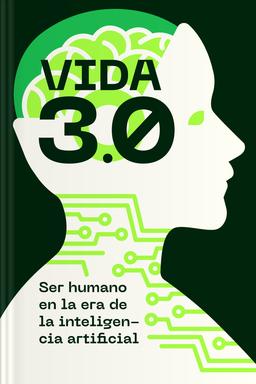
What is Vida 3.0 - Ser humano en la era de la Inteligencia Artificial about?

Este libro explora el impacto que la inteligencia artificial tendrá en la vida humana, desde la economía hasta la ética. Tegmark analiza cómo podemos navegar en un mundo donde las máquinas son cada vez más inteligentes y autónomas, y plantea preguntas cruciales sobre el futuro de la humanidad. La obra invita a reflexionar sobre nuestras responsabilidades y elecciones en un tiempo de profundas transformaciones tecnológicas.

Who should read Vida 3.0 - Ser humano en la era de la Inteligencia Artificial

  • Estudiantes de ciencia y tecnología.
  • Profesionales interesados en inteligencia artificial.
  • Lectores curiosos sobre el futuro de la humanidad.
book

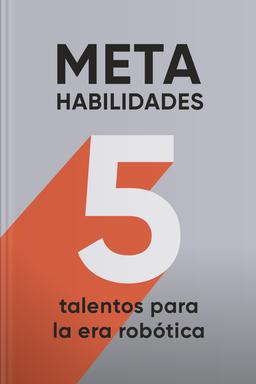
What is Metahabilidades - Cinco talentos para la era robótica about?

Este libro explora las habilidades esenciales que necesitarán los profesionales en la era de la automatización y la inteligencia artificial. A través de cinco metahabilidades clave, el autor ofrece herramientas y estrategias para adaptarse a un mundo laboral en constante cambio, fomentando la creatividad, la colaboración y el pensamiento crítico. Una guía para desarrollar talentos que se destacan en un entorno dominado por la tecnología.

Who should read Metahabilidades - Cinco talentos para la era robótica

  • Profesionales en tecnología que buscan adaptarse al cambio.
  • Estudiantes interesados en desarrollo personal y habilidades futuras.
  • Emprendedores que desean innovar en la era digital.
book

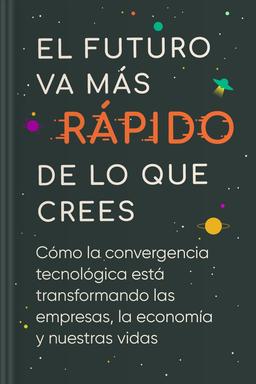
What is El futuro va más rápido de lo que crees - Cómo la convergencia tecnológica está transformando las empresas, la economía y nuestras vidas about?

Este libro explora la rápida evolución de las tecnologías y su impacto en el mundo actual. Los autores analizan cómo la convergencia de innovaciones disruptivas está revolucionando empresas y economías, así como nuestras vidas diarias. A través de ejemplos y estudios de caso, se plantea la manera en que estas transformaciones afectarán nuestro futuro cercano, invitando a los lectores a adaptarse y aprovechar estas oportunidades.

Who should read El futuro va más rápido de lo que crees - Cómo la convergencia tecnológica está transformando las empresas, la economía y nuestras vidas

  • Profesionales interesados en innovación tecnológica.
  • Estudiantes de negocios y economía.
  • Emprendedores buscando adaptarse al cambio.
book

Frequently asked questions about automation books

What are the four types of automation?

The four primary types are: fixed automation (dedicated to one task, like assembly lines), programmable automation (machines programmed for multiple tasks), flexible automation (handles variety without reprogramming, common in manufacturing), and intelligent automation (uses AI and machine learning to adapt and improve). Each type fits different scenarios depending on whether you need speed, flexibility, or decision-making capability from your automated systems.

What book did Bill Gates recommend for AI?

Bill Gates recommended 'The Coming Wave' by Mustafa Suleyman, which covers AI and emerging technologies. He also praised 'AI Superpowers' by Kai-Fu Lee for examining US-China AI competition, and 'Life 3.0' by Max Tegmark for addressing AI's future impact on humanity. Gates regularly shares book recommendations on his blog, which is worth checking for his latest AI and automation picks.

How can I learn automation?

Start with Python — it's the most popular language for automation scripts. Take online courses on Coursera or Udemy covering robotic process automation (RPA) or specific tools like UiPath or Selenium. Practice by automating your own repetitive tasks — data entry, file organization, and web scraping. Build small projects to apply what you learn. You can also read the summaries about automation on Headway.

Which course is best for automation?

Depends on what you want to automate. For software testing, Selenium courses work well. For business process automation, UiPath or Automation Anywhere certifications establish credibility. For general automation skills, Python courses covering automation libraries are solid. Coursera's "Python for Everybody" is beginner-friendly. For advanced techniques, look at machine learning courses since intelligent automation builds on ML. Consider your current skill level and what you're trying to automate.

What are the 4 D's of automation?

The 4 D's are: Dull (boring, repetitive tasks), Dirty (dangerous or unpleasant work environments), Dangerous (tasks risking human safety), and Dear (expensive processes where automation saves money). This framework helps determine what to automate first—essentially anything humans shouldn't have to do, or that's costing too much. Automating based on the 4 D's gives you quick wins and makes automation easier to justify.

What is the most used automation tool?

For software testing, Selenium dominates. For business process automation, UiPath and Automation Anywhere are popular. For workflow automation, Zapier and Make (formerly Integromat) work well with non-technical users. For DevOps, Jenkins and Ansible lead. Python is perhaps the most versatile automation tool since you can script basically anything. What's "most used" depends on your field — IT, marketing, and manufacturing all have different go-to tools.