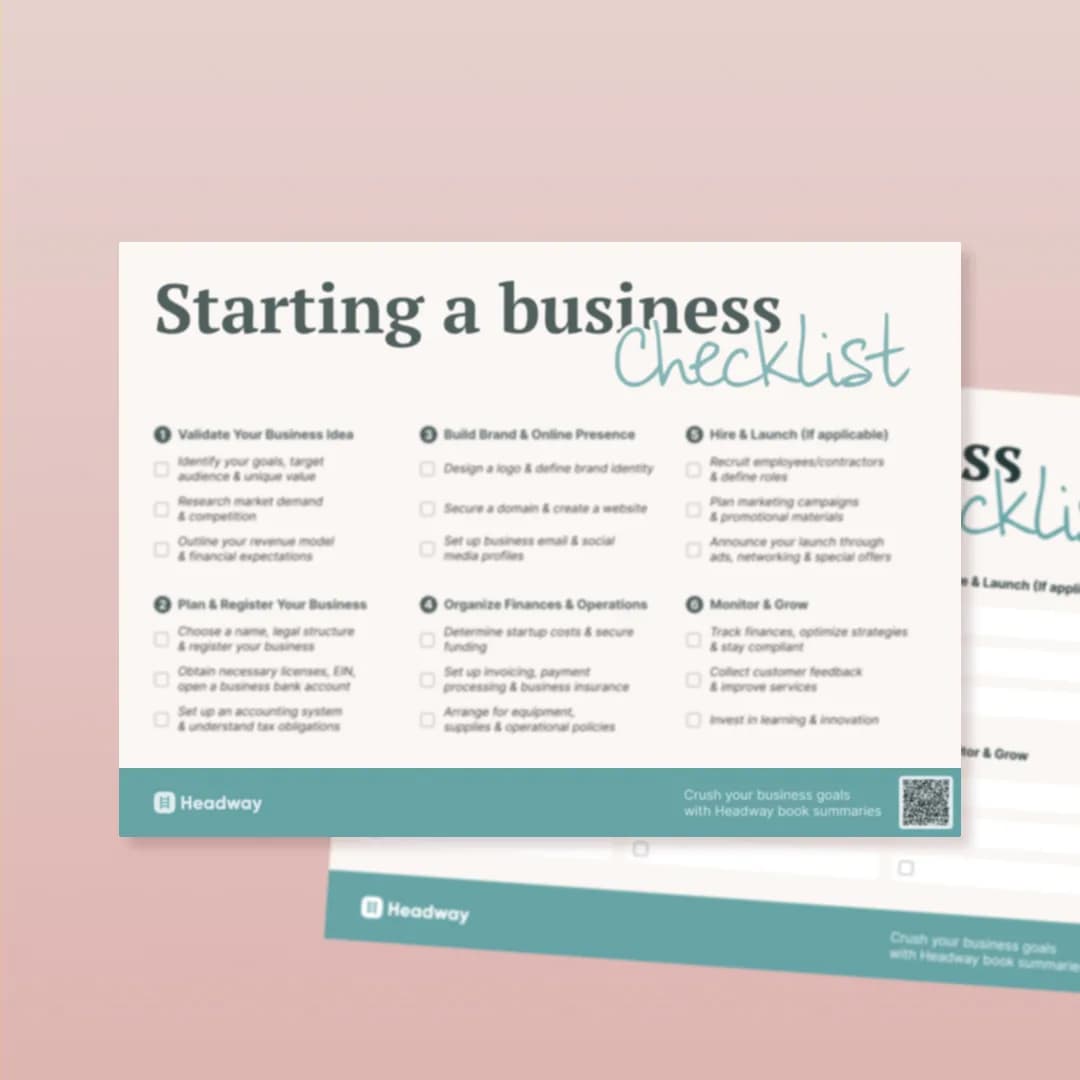
Starting a business is an exciting journey, but it comes with challenges. According to the US Small Business Administration, about 20% of new businesses fail within the first two years, and nearly 50% close within five years. Having a solid plan in place can help you avoid common pitfalls. Starting a business checklist ensures you stay organized and don't miss any essential steps in the startup process.
Research consistently shows that businesses with a clear plan are more likely to succeed. The National Small Business Association says that 60% of companies with formal business plans survive longer than those without. A checklist can guide you through all the steps — from figuring out your business structure (whether sole proprietorship or limited liability company) to registering your business name and obtaining necessary licenses. This checklist will help you confidently build your business idea and marketing plan.
With this checklist, you'll cover everything you need to get started doing business and set your business up for long-term success.
Essential tips for starting your business
While your checklist covers all the key steps, here are some extra tips to keep you on track and make sure you're doing everything you can to set your business for success:
Start small with a lean business model.
Regardless of your type of business, focus on crafting a minimum viable product (MVP) and testing it with real customers. This approach helps you save time and money by validating your idea early. You can apply lessons from 'The Lean Startup' by Eric Ries, which emphasizes quick experimentation and validated learning.
Know when you'll break even.
Identifying when your business will become profitable is crucial for your financial planning. By calculating your cash flow and break-even point early on, you'll have realistic expectations about when to anticipate the first signs of financial success. 'The Millionaire Next Door' by Thomas J. Stanley and William D. Danko provides excellent tips on managing money and building long-term wealth, which can help new business owners.
Don't skip legal steps.
Be sure to get the right contracts and paperwork in place from the start. Consulting with a lawyer to protect your business, whether you're setting up a sole proprietorship, an LLC, or another business entity, is essential. Adding this step to your business roadmap keeps you safe from any unexpected legal requirements down the line.
Automate where you can.
Use tools like accounting software and CRM systems to simplify your daily tasks. Automating these processes saves you time and reduces mistakes, so you can concentrate on growing your business. You can build these habits easily with advice from 'Atomic Habits' by James Clear.
Understand your taxes.
Make sure you know your business tax, federal tax, and sales tax obligations. You'll need to apply for a tax ID number and keep track of your tax returns. Staying on top of tax deadlines will help you avoid penalties and keep your finances in check.
Get insurance.
Ensure you have the right business insurance and workers' compensation insurance to cover unexpected situations. This aspect is one of the most critical steps in protecting your business from risks.
Set up a business bank account.
Set up a business bank account to keep your finances organized and separate from your personal account. This distinction also helps establish business credit, strengthening your chances of obtaining credit cards or loans later.
Build an online presence early.
Even if your business is local, having a social media presence and a website helps you build trust and reach a wider audience. Starting this process early on can pay off in the long run.
Focus on market research.
Research your target audience thoroughly to determine the best price for your product or service and stay competitive. Use market research to gather insights on your potential customers and competitors and adjust your pricing strategy accordingly.
Stay flexible and open to change.
Cultivate adaptability in your business approach, as the business world is constantly changing. Success in entrepreneurship comes from adapting to new trends and continuously improving. 'Good Strategy/Bad Strategy' by Richard Rumelt shows you how to develop a strong plan and adjust when things change.
How Headway summaries can help you scale your business
Headway summaries can give you quick, easy-to-understand advice from top business books as you build your business. For example, 'The Lean Startup' by Eric Ries, 'Atomic Habits' by James Clear, and 'The 80/20 Principle' by Richard Koch offer practical tips for testing ideas, building habits, and focusing on what matters most in your business.
Headway makes it easy to learn business strategies in a way that fits into your busy schedule. Whether you're working on your business plan, improving your marketing, or solving cash flow issues, Headway summaries give you the knowledge you need in a fast and easy format.
Get your free starting a business checklist
Ready to kickstart your business? Download your starting a business checklist above! Enter your email, and we'll send you a simple, no-fuss PDF checklist you can use at any stage of your business journey. This checklist will help you stay organized and ensure that all the crucial steps are covered, from registering your business name to understanding your legal structure.